October 23, 2026
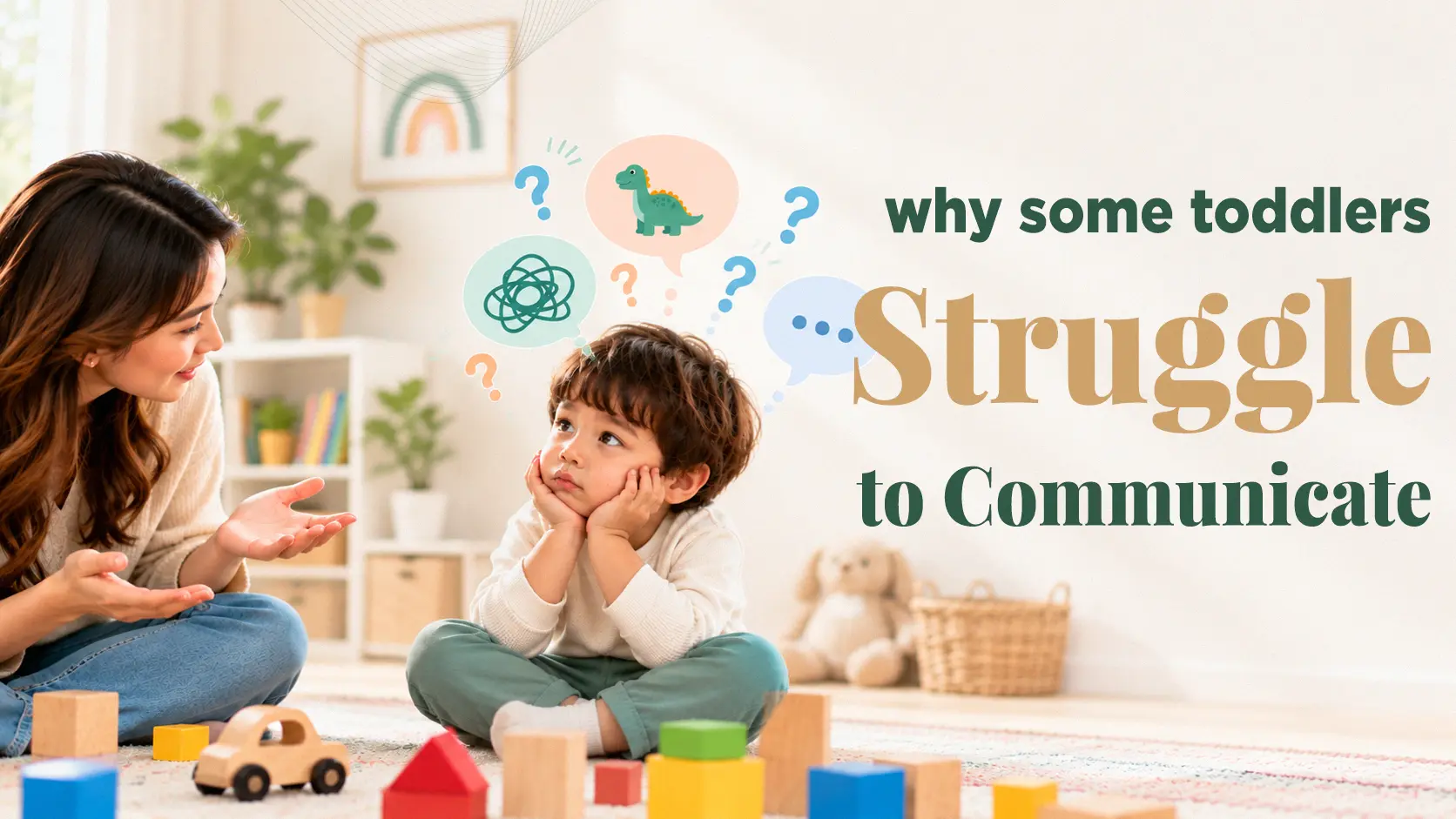
Your toddler may point towards the fridge to ask for milk, use sounds to get your attention, or say words that are difficult to understand. Gestures and sounds are meaningful forms of communication. If you are wondering how your child’s communication is developing, understanding the difference between speech and language can help.
Speech and language are closely connected, but they describe different skills. Parents often use “speech delay” to mean late talking; an assessment helps clarify whether a child needs support with speech sounds, language, or both.
Let’s break it down in plain terms.
What Does a Speech Delay Actually Mean?
Speech is how we produce the sounds in words. A speech sound delay means sound development is progressing more slowly than expected for a child’s age. A child may know what they want to say but find it hard to make the sounds clearly. Their language skills, such as understanding, vocabulary, and combining words, may be areas of strength. Speech and language differences can also occur together.
A child with a speech delay might:
● Use fewer speech sounds than expected for their age
● Struggle to pronounce certain sounds
● Be difficult to understand, even to close family
● Leave out or substitute sounds in ways that make words difficult to understand
What Does a Language Delay Actually Mean?
Language is how we understand and share meaning. A child with a language delay may need support understanding words and directions, using vocabulary, or combining words into phrases and sentences. Some children need support with understanding, others with expression, and some with both.
Delayed talking can be a symptom of either issue. That’s exactly why the distinction gets confusing for parents trying to figure out what’s going on.
This includes:
● Receptive language (understanding what others say)
● Expressive language (sharing meaning through spoken words, signs, or AAC, such as a communication app)
Where the Two Overlap
Speech and language develop together, but a child’s strengths and support needs can differ across these areas.
A toddler might have strong language skills (they understand instructions, use varied vocabulary) but unclear speech sounds. Another child might speak clearly but struggle to combine words into sentences or follow multi-step directions.
This is why a proper evaluation looks at both areas separately, not as one bundled concern.
Speech Delay vs. Language Delay: How the Two Present Differently
| Speech Delay | Language Delay | |
| Main issue | Sound production, clarity | Understanding and using language |
| Example | Age-inappropriate sound omissions or substitutions | Not combining words by age 2 |
| Understanding | Often intact | May be affected |
| Vocabulary and sentences | Can be typical | May be affected |
The impact depends on the child’s communication needs and daily experiences. Neither label alone tells us how much support a child needs.
Speech and Language Milestones
Children develop at different rates. Communication milestones offer a guide to speech, language, and gesture development; they are not a diagnostic checklist.
If your child is not meeting several milestones in their age range, or you have concerns about their progress, speak with an SLP. You do not need to wait for the gap to widen before seeking advice.
If you have concerns about your child’s communication, you can speak with an SLP at any time. Questions about progress, or several milestones that have yet to appear, are all reasonable reasons to reach out. An SLP can talk through what you are seeing, with or without a diagnosis.
By 13–18 months: Children often use gestures, understand familiar words and simple directions, and begin using words to communicate. Early words may not sound like adult speech.
By 19–24 months: Children typically use a growing vocabulary and begin combining two or more words, such as “more juice” or “go outside.” Speech may still be unclear.
Between 2 and 3 years: Children use word combinations more often and develop their grammar and vocabulary. Speech generally becomes clearer, but unfamiliar listeners may still have difficulty understanding them.
Between 3 and 4 years: Children use longer sentences, ask questions, and begin sharing simple stories. Their speech becomes increasingly understandable.
Understanding Speech Sound Disorders
A speech sound disorder is an umbrella term for difficulties producing or organizing speech sounds. Some children have difficulty making particular sounds; others use sound patterns that affect many words. An SLP considers the child’s age, languages, error patterns, and how easily others understand them.
Professionals use several terms for difficulties with speech sounds, and these terms can overlap. “Speech sound disorder” is an umbrella term for difficulties producing or organizing speech sounds. It can include what many parents call a speech delay. Different professionals may use different words for similar patterns. Support is planned around the child’s sound patterns, age, and languages.
Some sound substitutions are expected during development. An isolated example, such as saying “wabbit” for “rabbit,” does not establish a disorder. An assessment helps identify whether support is needed and which strategies may help.
Signs of Delay in Speech Development Worth a Closer Look
These observations do not confirm a diagnosis, but any one of them may be a reason to seek advice. An assessment can help you understand your child’s strengths and support needs.
Consider reaching out if your child:
● Is not yet using meaningful words around 18 months
● Hasn’t started joining two words together by age 2
● Remains hard for family members to understand at age 3
● Loses words or other communication skills they previously used—contact your child’s healthcare provider and an SLP promptly
● Shows frustration when trying to communicate
● Has difficulty sharing what they need during daily routines, whether they use words, sounds, gestures, or other communication supports
What to Expect During an Evaluation With a Speech-Language Pathologist
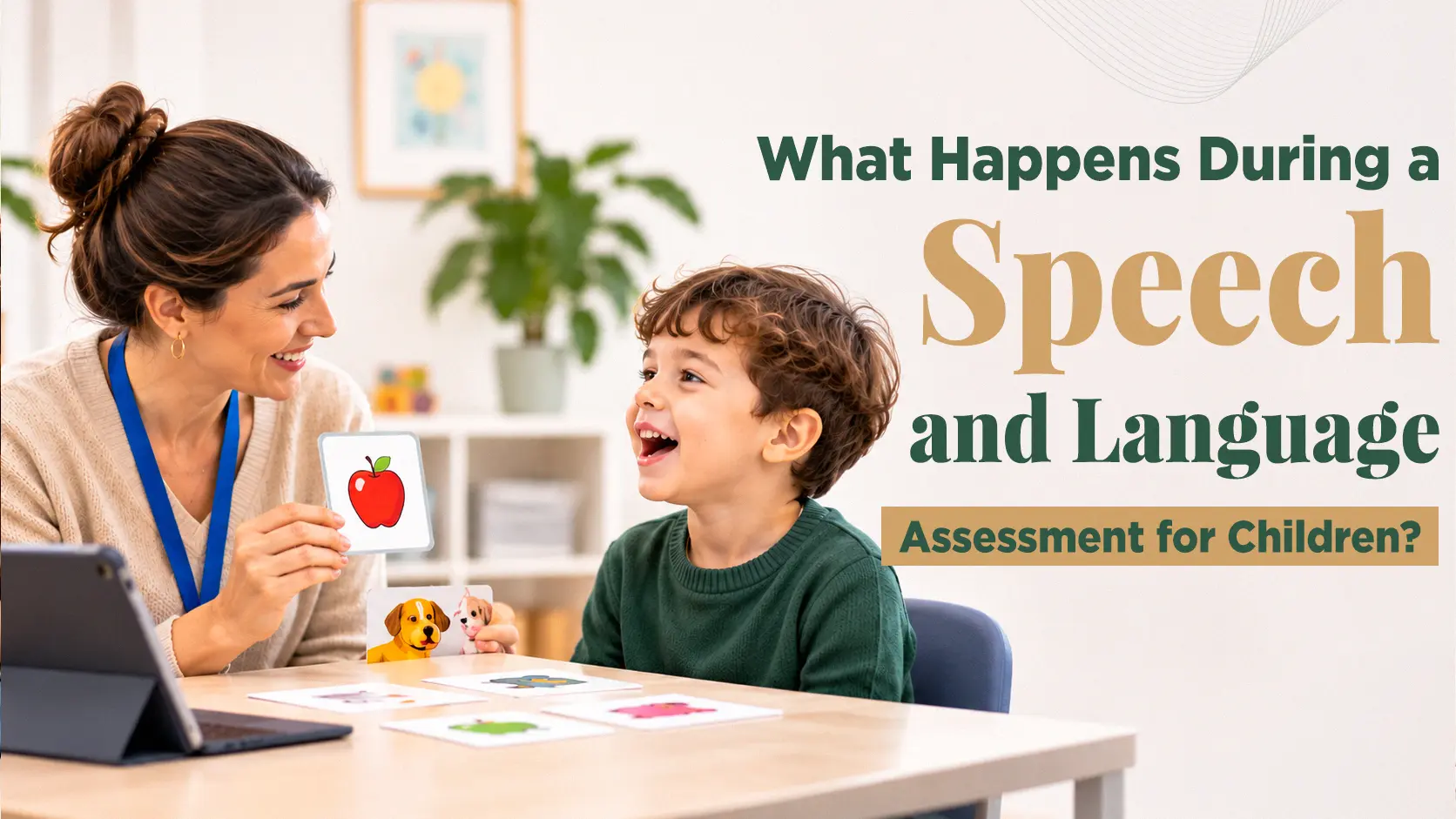
A speech-language pathologist (SLP) is a professional specifically trained in the development of communication. An assessment usually isn’t a single quick test. It typically includes:
1. A discussion with you regarding your child’s background and what you’ve noticed at home
2. Play-focused exercises that show how your child naturally interacts
3. Formal or informal assessment activities, selected according to the child’s age, languages, and needs
4. A clear explanation of findings and next steps, including a hearing assessment or other referrals when appropriate
Good assessments look at the whole child, not just a checklist. Your observations as a parent matter here. You see things at home and in daily routines that a single session can’t capture.
How Aria Approaches Speech Therapy for Toddlers and Language Delay
At Aria Integrated Care, we don’t treat “delayed talking” as a single problem with one fix. Speech delay and language delay call for different strategies, and we build each plan around what your child actually needs.
That might mean pediatric speech therapy for language delay focused on building vocabulary and sentence structure through play. Or it might mean targeted sound-production work for a child whose understanding is strong but whose speech is hard to follow.
A few things shape how we work:
● Therapy can take place in familiar settings. Aria offers in-home speech-language therapy across Greater Vancouver, allowing us to practise communication within play and everyday routines.
● Families help shape the plan. Your observations and priorities guide therapy, and we share practical strategies you can use between visits.
● Virtual therapy is available across British Columbia, so families outside Greater Vancouver still get access to individualized care.
Goals evolve as a child develops. Depending on their needs, therapy may focus on understanding language, sharing messages, combining words, developing speech sounds, or using communication supports such as AAC.
Practical Next Steps
If you’re still unsure whether what you’re seeing is typical variation or something worth a closer look, that uncertainty is normal. Many parents experience it eventually.
You do not need a diagnosis before reaching out. An assessment explores your child’s communication strengths and needs and helps identify appropriate next steps.
Understanding speech and language can make it easier to describe your concerns and choose the right support.
Ready to get clarity on your child’s communication development?
Book a consultation with Aria Integrated Care and talk with a speech-language pathologist about what you’re noticing. We’ll help you understand what’s typical, what’s worth watching, and what support might look like for your family.
Frequently Asked Questions
1. How do speech delay and language delay differ from one another?
Speech sound difficulties affect how clearly a child produces sounds. Language difficulties affect understanding or expressing meaning, including vocabulary and sentences. A child may need support in one area or both.
2. Is it possible for a child to experience speech delay and language delay simultaneously?
Yes. Speech and language skills develop together, so a child may show signs of both. An assessment looks at each area separately.
3. What early indicators suggest delayed talking in toddlers?
Reasons to seek advice include not using meaningful words around 18 months, not combining two words by age 2, or persistent difficulty being understood. A loss of communication skills should be discussed promptly with a healthcare provider and an SLP.
4. What is a normal speech milestone for a 2 year old?
By around age 2, children typically begin combining two or more words, such as “more milk.” Speech may still be unclear. Consider understanding, gestures, vocabulary, and progress together rather than relying on one milestone.
5. Does a speech sound disorder equate to a speech delay?
The terms can overlap. A speech sound delay may fall within the broader category of speech sound disorders. An SLP assesses sound patterns and clarity in relation to the child’s age and languages.
6. When should I get a speech and language assessment for my child?
If your child isn’t meeting typical speech milestones or seems frustrated communicating, an assessment can help determine what support may help.
7. What happens during a speech-language assessment?
An SLP talks with parents, observes play-based communication, and compares skills to expected milestones. You’ll get clear next steps afterward.
8. Does speech therapy for toddlers work if a child understands everything but talks unclearly?
Yes. Speech therapy can target sound production and clarity even when a child’s understanding of language is already strong.
9. Can speech delays in toddlers improve without therapy?
Some children catch up, while others need ongoing support. It is not always possible to predict this from late talking alone. An assessment can guide support and monitoring rather than relying on waiting.
10. Does Aria Integrated Care offer in-home speech therapy for toddlers?
Yes. Aria provides in-home speech therapy across Greater Vancouver and virtual sessions across British Columbia.