Speech, Language and Communication Support for People With Down Syndrome
Individualized speech-language therapy for children, adolescents and adults with Down syndrome. In-home services are available across Greater Vancouver, with virtual services available throughout British Columbia.
How Down Syndrome May Affect Speech and Communication
Down syndrome may influence speech, language and communication in different ways. Some people experience difficulty producing clear speech. Others need support with understanding language, expressing ideas, vocabulary, grammar, memory, communication participation, or AAC. Every person has their own combination of strengths and support needs.
Factors such as hearing, muscle tone, oral structure and function, motor coordination, memory, language development, and overall health may all play a role. An individualized assessment helps determine which of these actually matter for the person in front of us.

Signs Someone May Benefit From Speech-Language Support
No single sign on this list confirms therapy is needed. These are patterns families, individuals, and communication partners often notice first, worth raising with an SLP, not a verdict on their own.
Difficulty Communicating Needs or Ideas
Sharing choices, experiences, or preferences takes more effort than it seems like it should.
Speech That's Hard for Unfamiliar Listeners
Words come out, but people outside the immediate care team struggle to follow along.
Difficulty With Longer or Complex Information
Pointing, reaching, and signing often show up before spoken words do.
Shorter Spoken or AAC-Supported Messages
Communication stays brief even as the person's ideas and needs get more complicated.
Using Gestures, Signs, Pictures or AAC
Gestures, signs, facial expressions, pictures, communication boards, and speech-generating devices are meaningful forms of communication. They may work alongside speech or serve as a person's primary method.
Difficulty Repairing Communication Breakdowns
When a message doesn't land the first time, trying again a different way is hard.
Changes in Established Communication Ability
Skills that used to be there seem to be slipping. This matters at any age, not just early childhood.
Speech, language, and communication development vary considerably from person to person. An assessment looks at spoken language, understanding, AAC, and functional communication as separate threads, not one combined result.
Support for Other Developmental and Genetic Diagnoses
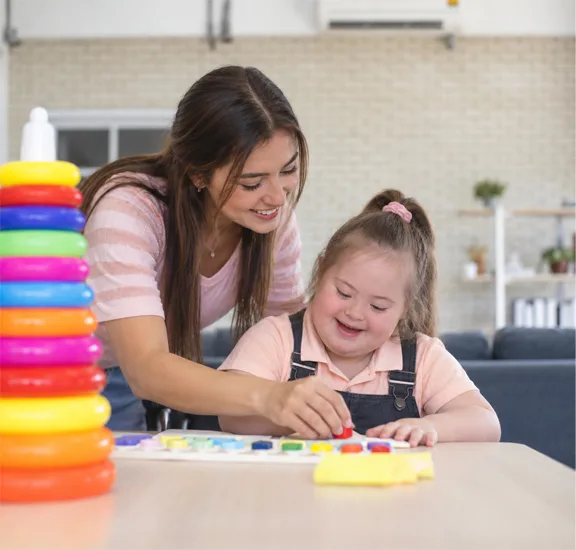
AAC for Down Syndrome: Another Way to Communicate
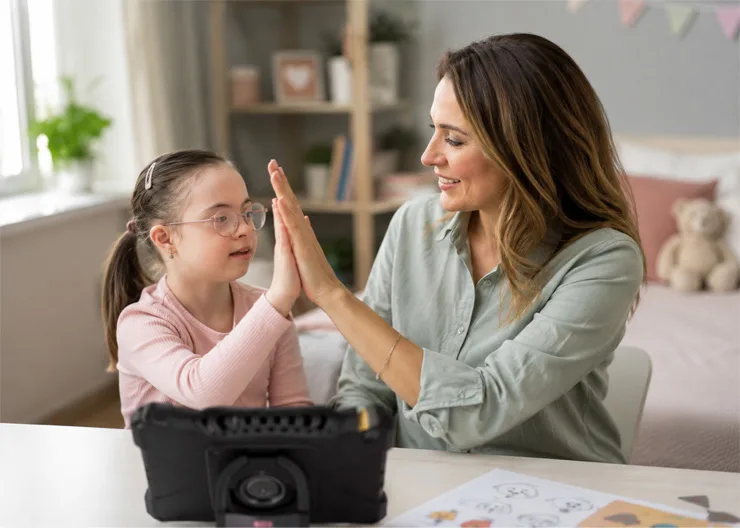
In-Home Visits in Vancouver, Virtual Therapy Across BC
Aria Integrated Care is led by Preet Shah, MASLP, R-SLP, a registered Speech-Language Pathologist with previous experience supporting people with Down syndrome. The practice runs on one idea: therapy should fit a person's life, not the other way around.
Whether someone is building early communication, adjusting to a diagnosis identified later in life, or navigating a change in communication at any age, the model doesn't change. Care comes to the person.
In-Home (Greater Vancouver)
Sessions happen within familiar routines and environments, cutting down on travel, depending on clinician availability.
Virtual (BC-Wide)
Assessment, consultation, and therapy delivered by video across British Columbia when that format fits the person's goals, communication needs, technology, and access requirements.
Who's Involved in Your Care at Aria
All initial assessments and treatment plans are completed by a registered Speech-Language Pathologist. A Speech-Language Pathology Assistant may deliver selected therapy activities under the SLP's direction and supervision, once that fits the person's goals.
Working With Other Professionals
With consent, the SLP may collaborate with family members, educators, physicians, audiologists, occupational therapists, physiotherapists, and other people on someone's support team. Collaboration helps with consistency across settings; it isn't a guarantee of it.
Reports and Documentation
Written reports, extensive documentation, material preparation, and communication with other professionals may be billed separately as indirect time. We'll discuss any additional fees with you before they come up.
Communication Needs Change Over Time

What Speech-Language Support Looks Like
There's no single script here. Every step below reflects a registered SLP's clinical judgment: what to assess, what to prioritize first, and how quickly to move, based on the person actually in the room. That's what individualized planning looks like when it's done properly, not a five-step formula run the same way twice.
01
Free Consultation
A free 15–20-minute conversation to learn about the person's communication needs and talk through possible next steps.
02
Individualized SLP Assessment
An SLP assesses relevant areas of speech, language, functional communication, and AAC, using activities suited to the person's age and needs. This can happen in person or virtually, whichever fits the goals and the assessment activities required.
03
Collaborative Goal Setting
Goals get built with the client and, where it makes sense, family members or other communication partners.
04
Individualized Therapy
Sessions may address speech, language, AAC, communication strategies, and participation in everyday life.
05
Review and Adjustment
Progress and priorities get reviewed regularly, and goals adjust as needs change. Specific outcomes and timelines can't be promised.
Funding and Payment Options
Funding options vary by age, eligibility, location, and individual circumstances. Families and clients may use eligible public funding, charitable funding, extended health benefits, or private payment. Coverage of assessments, reports, indirect time, travel, and in-home services varies by funder, so confirm details with the relevant funder before booking.
Aria is currently accepting new inquiries, subject to clinician availability, service location, and clinical fit.
Down Syndrome Speech, Language and Communication Support: Your Questions Answered
Real questions from BC families, answered plainly. Ask us anything else during your free consultation.
Communication Support Built Around the Individual
Talk with Aria about speech, language and AAC support for a child, a teen or an adult. Book a free consultation and map the right next step, together.