Autism Speech Therapy
Support your child's communication with specific autism speech therapy customised to their strengths, goals, and everyday life. Every family's path looks different, and we're here to help you find yours.
Communication Differences That May Benefit From Support
Every child develops communication differently. A few patterns are worth a conversation with an SLP, especially if they show up alongside other autism traits.
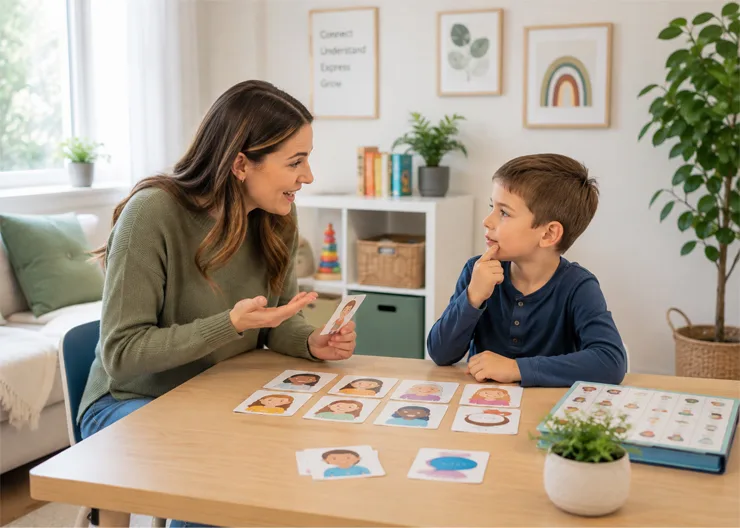
Autism and Speech Delay: What's the Difference?
These two get mixed up constantly, so here's the plain version.
Speech delay
A speech delay usually means your child is developing language later than expected, though every child's path looks a little different. Some children catch up on their own; others benefit from extra support along the way.
Autism
Autism is a lifelong neurodevelopmental difference shaping how a person thinks and connects. Some autistic children talk early; others are nonspeaking and communicate just as fully through other means.
A child can have a speech delay without being autistic, and an autistic child can have completely typical speech. Neither one is a flaw to correct. Both just tell us where to start.
Autism Social Communication Therapy
Autism shows up differently in every child we work with. Here's how it can look, and what support actually does for each one.
Nonspeaking Communication
We build functional communication through AAC devices, picture systems, gestures, and spoken words together, whichever combination helps your child get heard.
Social Communication
Support for reading social cues, taking turns in conversation, and connecting with peers, on your child's own terms, never by asking them to mask.
Scripting and Echolalia
Repeating lines from a favourite show isn't meaningless; it's real language. We work with your child's natural patterns to build flexible, functional communication over time.
Sensory-Friendly Sessions
Therapy is paced to your child's sensory needs, so a loud or bright environment is far less likely to slow down progress.
Our Therapy Approach
We meet your child where they are, not where a chart says they should be. Real toys, real interests, real conversations.
Our approach may include:
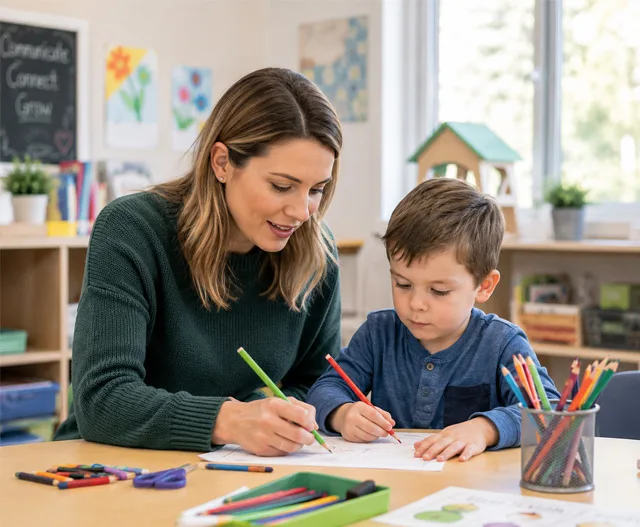
What Happens During the Assessment
Understand your child's communication profile through a supportive assessment built around how they already engage with the world.
01
Initial Conversation
We ask about your child, your priorities, and what a typical day looks like for your family.
02
Communication Assessment
We observe how your child connects, whether through speech, AAC, gesture, or a mix of all three.
03
Goal Setting
We set goals that matter at home, at school, and with the people your child wants to talk to.
04
Clear Next Steps
You get clear, plain-language recommendations you can actually use, focused on your child's communication rather than a diagnosis.
05
Home Practice Tips
Small, doable strategies that fit into your family's actual routine
What Progress Can Look Like
Change shows up in ordinary moments: a shared laugh, a clearer request, a longer conversation. Here's what families often notice first.
Sharing What They Need
Connecting Through Play
Confident Communication
Conversation Skills
Building Connection Skills
Feeling Understood at Home
Why Families Choose Aria Integrated Care
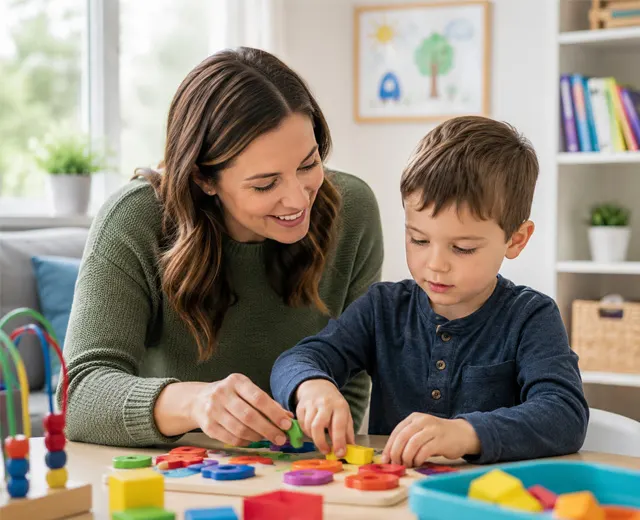
Therapy Where Your Family Needs It
We make autism speech therapy accessible with in-home visits across Greater Vancouver and secure virtual sessions across British Columbia.
In-Home Therapy
In-home autism speech therapy happens in your own space, with your child's own toys. It's familiar ground, and easy for a sibling or caregiver to join and learn alongside them.
Virtual Therapy
Families anywhere in BC get the same speech-language pathologist for autism support over a secure video call. No drive, no waiting room, no transition meltdown in the parking lot.
Frequently Asked Questions
Before booking, most parents want a clearer picture of how autism speech therapy works. Here's what we cover most often.
Your Child's Voice Starts Here
However your child communicates today, autism speech therapy meets them there and builds from it. The next step is finding out what that looks like for your family.