Stroke and Aphasia Recovery
Individualized, evidence-based speech therapy to help you reconnect with your words, your people, and your life.
Understanding Aphasia After a Stroke
Aphasia is a language disorder caused by damage to the brain, most often from a stroke. It can affect expressive language, meaning speaking and writing, and receptive language, meaning understanding and reading, but it says nothing about your intelligence.
Aphasia differs from dysarthria (weak or slurred speech muscles) and apraxia (trouble planning speech movements). Whatever form this communication disorder takes, our goal is to support your authentic voice, not fix or normalize it.
Types of Aphasia We Support
Aphasia is nonfluent (slow, effortful speech) or fluent (easy speech, unclear meaning). We find your pattern first, since Broca's and Wernicke's need different starting points.
Broca's
Slow, effortful speech, often just a few words, understanding intact
Wernicke's
Speech flows easily, but the words chosen miss the intended meaning
Global
Significant impact across all language skills
Anomic
Speech stays fluent and strong, but word-finding gaps show up often
How We Approach Stroke and Aphasia Recovery
Your plan starts with real assessment, then builds toward the conversations that matter most to your daily life.

In-Home in Greater Vancouver, or Teletherapy Anywhere in BC
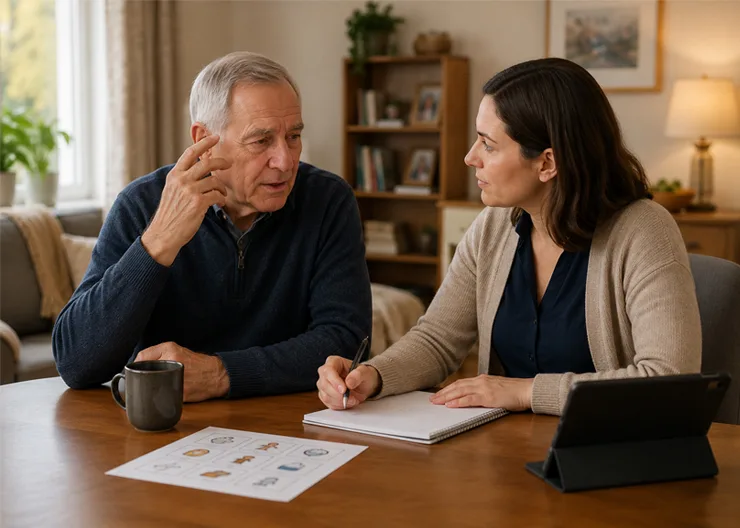
Stroke recovery can make travel exhausting. Aria brings therapy to your home across Greater Vancouver, or connects with you by video anywhere in BC.
In-Home in Greater Vancouver
Our clinicians come to you, in the home where your words and your life actually happen.

Teletherapy Anywhere in BC
For anywhere else in BC, teletherapy brings the same individualized care to your screen

Paying for Aphasia Therapy: ICBC, WorkSafeBC, and Extended Health
Speech therapy after a stroke is a real cost to plan for. If your stroke followed a motor vehicle accident, ICBC may reimburse reasonable and necessary post-stroke aphasia therapy as part of an active claim, and WorkSafeBC may cover treatment tied to a workplace incident.
Both pathways typically require documentation from a physician or case manager, so raise speech therapy early in your claim. Many extended health plans also cover speech therapy for stroke patients. We recommend checking your specific policy before your first session.

What Recovery Looks Like Over Time
Aphasia recovery is not a fixed window. Many people keep building communication skills years after their stroke, with the right ongoing support.
01
Assessment
We map your current communication skills across speaking, understanding, reading, and writing, then identify what matters most to you.
02
Early Therapy
Focused sessions target your specific type and severity of aphasia, building consistency through structured, repeated practice.
03
Building Momentum
Skills expand from single words into longer, more natural conversations across different everyday settings.
04
Maintenance
Chronic-stage therapy keeps hard-won skills active, since real progress can continue well past the first year.
05
Ongoing Support
We revisit and adjust your plan as your daily life, relationships, and communication goals continue to change.
Frequently Asked Questions
Real questions from stroke survivors and families, answered plainly. Ask us anything else during your free consultation.
Your Words Are Worth the Work
Individualized, in-home or virtual speech therapy across BC, ready when you are.